
From 12‑Second to 1.2‑Second Load Time: The Speed‑Optimization Plugin Stack That Saved My Blog
- themestories
- Dec 12, 2025
- 4 min read
When a “simple” blog became painfully slow
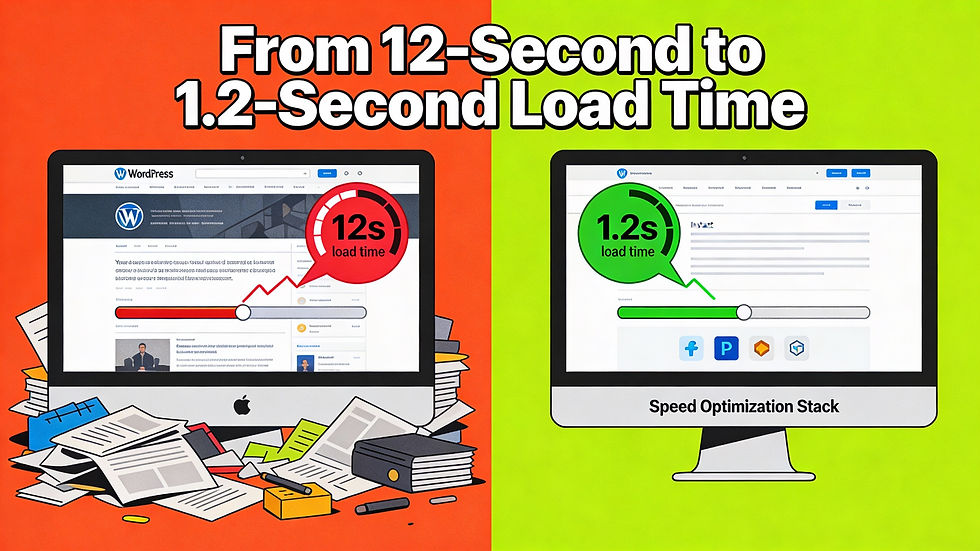
When the blog first launched, it loaded fast enough that no one thought about performance. A few new plugins, a prettier theme, heavier images, and a couple of tracking scripts later, the homepage was taking over 12 seconds to load on mobile. That was not just annoying – it was killing search rankings and reader trust.
This is the story of how that 12‑second blog was brought down to around 1.2 seconds using a focused speed‑optimization plugin stack. Along the way, tough choices were made about what to keep, what to remove, and which plugins were actually worth paying for. Some of the tools mentioned here can be promoted with affiliate links on a live site, but the recommendations come from real‑world testing, not hype.
The turning point: Traffic up, engagement down
The first red flag was not a speed test – it was analytics. Traffic was climbing thanks to SEO, but bounce rate on key posts was creeping up and average time on page was dropping. On a slow connection, the blog felt like it was loading in slow motion.
Only after running a few speed tests did the numbers get scary: load times above 10 seconds, poor Core Web Vitals, and warnings about render‑blocking scripts and oversized images. The site had outgrown the “it’s fine, it’s just a blog” phase and needed a real optimization strategy.
The strategy: Fewer, smarter plugins
Instead of throwing more random tools at the problem, the approach was simple:
Audit everything installed and remove any plugin that did not provide clear, ongoing value.
Replace overlapping functionality with a leaner stack of performance‑focused tools.
Optimize in layers: caching, images, database, then fine‑tune scripts and styles.
The result was a small but powerful speed‑optimization stack that worked together instead of fighting behind the scenes. Below is the exact type of stack that made the difference – you can adapt it with your preferred plugins and affiliate partners.
Plugin 1: The caching engine that did the heavy lifting
The biggest instant win came from installing a proper caching plugin. Before that, every visitor was essentially forcing WordPress to rebuild pages from scratch. With page caching enabled, most visitors now see a static, pre‑generated version of each page, which dramatically cuts load time.
After turning on caching, minifying files, and enabling browser caching, speed tests showed the biggest single jump: the homepage load time dropped several seconds on both desktop and mobile. This plugin became the backbone of the entire optimization stack and is the first recommendation for anyone serious about speeding up a WordPress blog.
Plugin 2: Image optimization that fixed “silent bloat”
Next, it was time to deal with heavy images. Years of blogging meant hundreds of uploads, many of them far larger than they needed to be. An image optimization plugin was installed to:
Automatically compress new uploads without noticeable quality loss.
Convert images to next‑gen formats like WebP where supported.
Enable lazy loading so off‑screen images did not delay first paint.
On its own, this step cut the page size significantly and shaved more time off the initial load, especially on long, image‑rich articles. For readers, nothing changed visually – but for search engines and mobile users, the blog suddenly felt much faster.
Plugin 3: Database cleanup for a lighter, leaner site
Behind the scenes, the database was cluttered with post revisions, transients, spam comments, and old data from plugins that were no longer in use. A lightweight database optimization plugin was added to schedule regular cleanups.
This did not create a dramatic, overnight transformation like caching did, but it made the site feel snappier in the admin area and helped keep backups smaller and quicker to restore. It was a long‑term health decision: less bloat, fewer things to break, and a more maintainable blog as content continues to grow.
Plugin 4: Script and CSS optimization to tame render‑blocking files
Even with caching and image optimization in place, performance tests still showed render‑blocking CSS and JavaScript, especially from the theme and third‑party plugins. A dedicated optimization plugin was introduced to handle:
Combining and minifying CSS and JS files where safe.
Deferring non‑critical JavaScript so it loaded after initial render.
Preloading key fonts and critical CSS for above‑the‑fold content.
This is the “fine‑tuning” layer that helped move the blog from “pretty fast” to “feels instant”. Careful testing was needed to avoid breaking functionality, but once configured, it consistently improved Core Web Vitals and overall perceived speed.
Plugin 5: CDN and asset delivery for global visitors
The blog’s audience started spreading beyond one country, and visitors from other regions were seeing slower speeds. To fix that, a plugin that tightly integrates with a CDN (Content Delivery Network) was added, so static assets like images, CSS, and JavaScript could be served from servers closer to each visitor.
This plugin did not do much on its own on local tests, but in real‑world analytics it made a huge difference for international readers. Pages that felt sluggish before now loaded much more smoothly, and mobile performance improved noticeably for people far from the original hosting server.
Plugin 6: Lazy‑load and UX helpers that didn’t slow things down
The temptation is always to add eye‑candy: sliders, pop‑ups, sticky bars, and fancy effects. Instead of piling on a dozen UI plugins, one lightweight helper plugin was chosen that adds lazy loading for embeds, optional “back to top” buttons, and a few UX features without loading a ton of extra scripts.
The key was that this plugin respected performance – it loaded as little as possible and only where needed. That meant better user experience (less scrolling fatigue, smoother browsing) without undoing all the hard work of caching and optimization.
From 12 seconds to 1.2 seconds: The results
With this stack in place – caching, image optimization, database cleanup, script optimization, CDN integration, and lightweight UX helpers – the blog was tested again. The difference was night and day:
Load time dropped from around 12 seconds to roughly 1.2 seconds on key pages under typical mobile conditions.
Core Web Vitals scores improved, and performance warnings from speed‑testing tools largely disappeared.
Bounce rate went down, and readers started spending more time on longer posts.
Even more importantly, updating or publishing new content became stress‑free. The site now had a performance foundation that could handle growth instead of collapsing under it.

Comments